



Published: September 10th, 2026 at 20:00 UTC+02:00
SamMobile has affiliate and sponsored partnerships, we may earn a commission.
Apple arrived years late to the foldable smartphone market and immediately checked several boxes Samsung had left empty.
Reading time: 5 minutes
Abhijeet Mishra / SamMobile
Apple unveiled its first foldable phone, the iPhone Duo, on September 9. It is an exorbitantly expensive device (outside the USA) that is considerably thicker and heavier than the Galaxy Z Fold 8.
Nevertheless, Apple’s first attempt at a foldable has surprised me.
I expected the iPhone Duo’s software to look polished. Software integration has always been one of Apple’s greatest strengths, and the company rarely enters a new product category without carefully adapting its operating system for it.
What surprised me were some of Apple’s hardware choices, and how many of them address weaknesses Samsung has left unresolved after eight generations of foldable phones.
Before criticizing Samsung, it is worth acknowledging everything the Galaxy Z Fold 8 gets right.
These advantages are meaningful and could easily make Samsung’s foldable the better choice for many people. But they don’t excuse the areas where Apple appears to have caught Samsung sleeping.
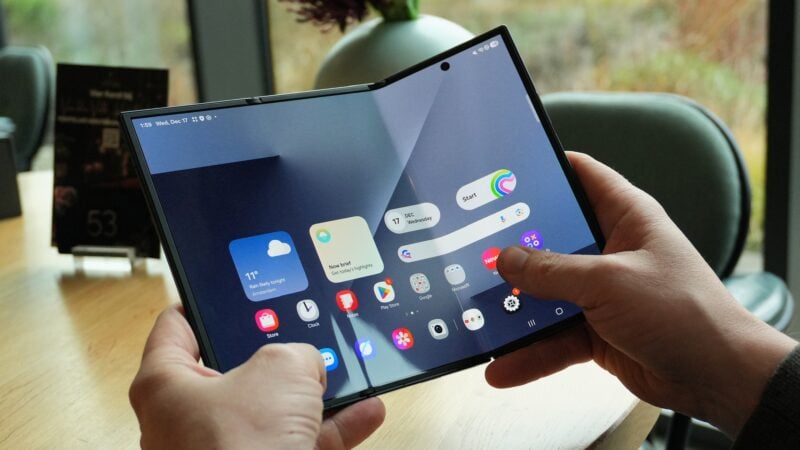
The iPhone Duo’s foldable display has a matte nano-texture finish. It doesn’t eliminate the crease, but it reduces reflections and helps make that crease less noticeable, at least when the screen is hit by indoor lights.
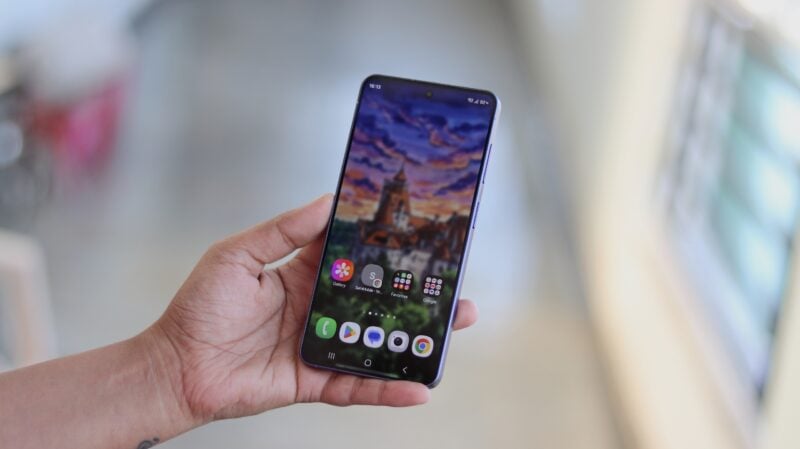
The Galaxy Z Fold 8 has an anti-reflective coating on its inner display, so Samsung hasn’t completely ignored this problem. However, Apple appears to have taken the idea one step further with a textured finish that also gives the screen a paper-like feel.
Apple has also used an under-display camera for the inner screen. Samsung introduced similar technology with the Galaxy Z Fold 3 but abandoned it with its newer foldables in favor of bettery picture quality and a camera with a wider field of view.
That decision is understandable. Under-display cameras generally offer inferior image quality. But the inner camera is used mostly for video calls, and many users would probably accept slightly lower quality in exchange for an uninterrupted display.
Apple has also implemented proper Flex Mode-style functionality. The iPhone Duo can remain open halfway, with supported apps placing content on one half of the display and controls on the other.
This is functionality Samsung pioneered, yet the standard Galaxy Z Fold 8 doesn’t support it. The Fold 8 can stand in a tent position, but it cannot remain open in the same laptop-like position as the iPhone Duo and other Galaxy Z Fold models.
Apple has even added Apple Pencil support for both displays. Samsung, the company that made stylus support a defining feature of large-screen smartphones, no longer offers S Pen compatibility on its foldables. Even when it did, stylus support was limited to the inner display.
Then there is dust resistance. The iPhone Duo carries an IP68 rating, while the Galaxy Z Fold 8 remains limited to IP48. Samsung was the first company to make foldable phones water-resistant, but it has made little progress with dust protection since then.
For Apple to achieve IP68 certification with its first foldable while Samsung remains stuck at IP48 after nearly eight years is simply unacceptable.
Samsung’s greatest strength has always been hardware. It has the engineering experience, manufacturing expertise, display technology, and resources required to produce exceptional foldable devices.
The company also knew Apple was developing a foldable phone. Apple’s plans had been reported for years, giving Samsung plenty of time to anticipate what its biggest rival might bring to the category.
Yet Apple’s first foldable has arrived with a matte-coated inner display, an under-display camera, proper halfway-folded functionality, stylus support, and full dust resistance.
Samsung either underestimated how aggressively Apple would enter the market or decided these upgrades weren’t important enough. Neither explanation reflects particularly well on the company.
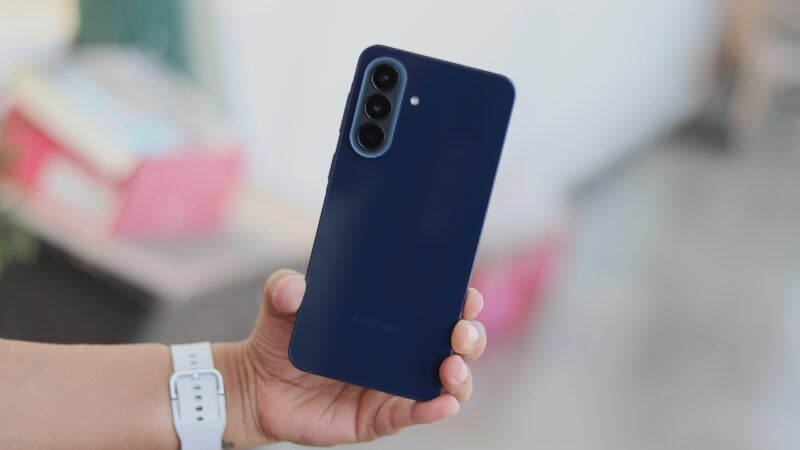
The Galaxy Z Fold 8 remains lighter, thinner, more affordable, and more capable as a productivity device. It is still an excellent foldable and may be the more sensible purchase for many people.
But that doesn’t change the uncomfortable reality. Apple arrived years late and immediately checked several boxes Samsung had left empty.
I hope this results in an uncomfortable meeting at Samsung’s headquarters. TM Roh and his team should never have allowed Apple to surprise Samsung on its own home turf.